
The value of Brand Ambassadorship when entering a new market
In business, just like in sport, credibility cannot simply be bought. A brand may have an innovative product or service and an ambitious campaign, but entering a new arena requires the confidence of athletes and supporters. This is where the right ambassador becomes especially valuable.
An effective ambassador lends more than fame. Athletes provide technical insight, demonstrate products under genuine competitive pressure and introduce brands to communities that might otherwise remain sceptical. Their reputation becomes a bridge between what a brand claims and what audiences are prepared to believe.
Andy Murray’s partnership with Under Armour illustrates this clearly. When the American company signed the Wimbledon champion in 2014, it was making a significant move into elite tennis. Murray’s resilience, professionalism and international profile gave Under Armour immediate visibility in a sport traditionally dominated by established tennis labels. Every match became evidence that the company’s clothing could perform at the highest level. The Guardian reported the partnership at the time.
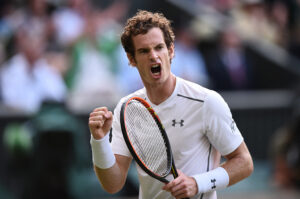
Photo by LEON NEAL/AFP via Getty Images
A similar shift occurred in 2023 when Harry Kane became the face of Skechers Football. Skechers was widely associated with comfort and lifestyle footwear rather than elite football boots. Launching its first football range with England’s captain and record goalscorer changed that conversation almost overnight. Kane wore the SKX_01 during his move to Bayern Munich, giving the new product both visibility and competitive legitimacy. It was a bold entrance because the ambassador and the category launch were inseparable: Kane effectively introduced Skechers Football to the world.
Roger Federer’s relationship with Swiss running brand On offers a third model. Joining as a co-entrepreneur in 2019, Federer did not merely promote an existing shoe. He contributed experience and design knowledge as On expanded into tennis. His involvement helped the company enter the category with a sense of authenticity rather than appearing to chase an opportunity from the sidelines. On describes Federer’s role as both athlete and footwear innovator.
New Balance used Kawhi Leonard to support its return to basketball after a long absence. Leonard’s understated personality suited a brand seeking a distinctive position, while his performances -including an NBA championship and Finals MVP award in 2019 – placed New Balance on one of basketball’s largest stages. The partnership ultimately produced a signature shoe designed with Leonard, connecting endorsement with product development.
PUMA took a broader approach when it returned to basketball in 2018 after almost 20 years away. It recruited leading draft prospects including Deandre Ayton and Marvin Bagley III, while involving Jay-Z as creative director. The combination of athletes, heritage and cultural influence helped PUMA reconnect basketball performance with music and fashion. Its first new basketball shoe quickly sold out.
These examples show that successful ambassadorship is not simply celebrity advertising. The strongest partnerships align personality, performance and purpose. When that alignment is genuine, an ambassador does not just wear the brand – they give it permission to enter the game.